Introduction
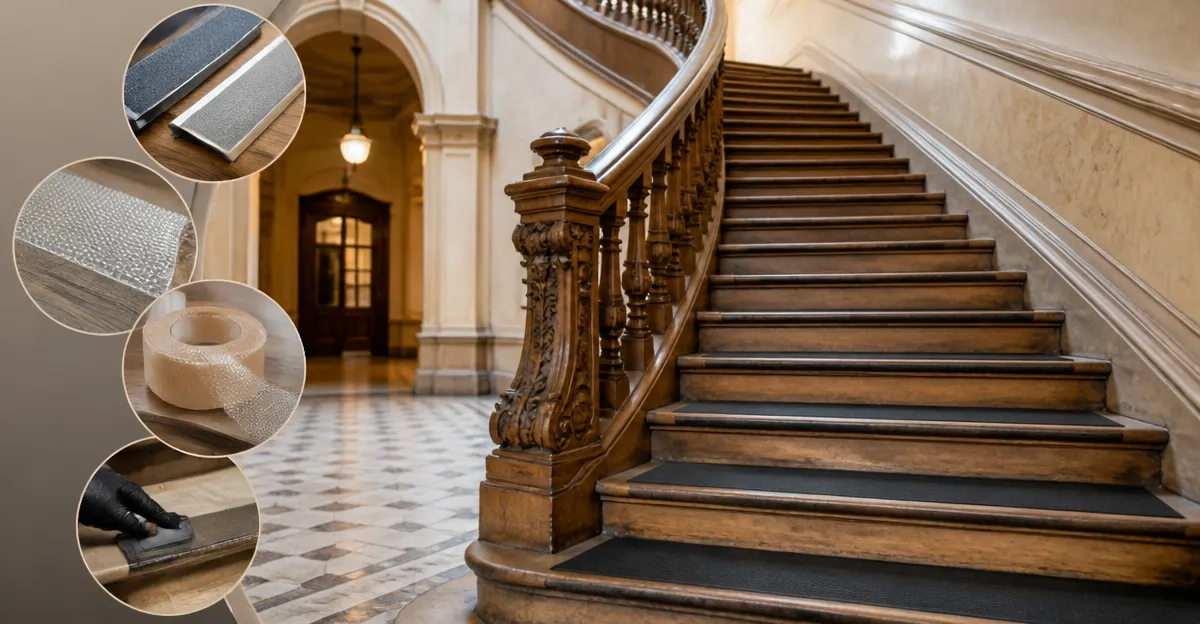
This guide addresses the challenge of maintaining historic staircases while improving safety for occupants and visitors. Readers will learn about anti‑slip technologies, how to select solutions that respect original materials, and which commercially available products provide reliable performance without compromising aesthetic value.
The discussion balances preservation theory with actionable recommendations, enabling caretakers of heritage buildings to make informed decisions that protect both the structure and its users.
Background/Context
Historic stairs often consist of wood, stone, or early‑era tile, each presenting unique surface characteristics. Over time, wear, polishing, and cleaning can create a smooth, low‑traction finish that increases the risk of falls, especially for seniors, children, and pets.
Conservation guidelines advise that any intervention should be reversible, minimally invasive, and visually compatible with the original design. Anti‑slip treatments therefore fall into two categories: surface‑applied tapes or treads, and permanent finishes such as etched coatings. This guide focuses on removable treads, which satisfy reversibility requirements while offering immediate safety benefits.
Understanding Anti‑Slip Technologies
Anti‑slip products rely on three primary mechanisms: mechanical grip, adhesive backing, and material composition. Mechanical grip is achieved through raised patterns, tiny protrusions, or textured surfaces that increase friction between foot and stair. Adhesive backing must hold securely on a variety of substrates—wood, tile, marble—yet allow removal without residue. Material composition influences durability, water resistance, and visual impact.
For historic settings, transparency and low profile are essential. Clear tapes such as Butizone Clear Stair Treads and SMILOOL Clear Stair Treads provide grip while remaining nearly invisible, preserving decorative details. Opaque options, such as COSY HOMEER Stair Treads, add a subtle visual accent and are useful where aesthetic contrast is acceptable.
Choosing the Right Material for Historic Stairs
When selecting an anti‑slip solution, consider the following criteria:
- Substrate compatibility: Verify that the adhesive functions on the specific material, whether polished wood, glazed tile, or stone.
- Reversibility: Choose products that can be peeled away without leaving residue or damaging the finish.
- Transparency: For highly decorative stairs, clear tapes maintain visual integrity.
- Durability: Outdoor or high‑traffic interiors require water‑resistant and washable treads.
In many heritage homes, the stair treads are narrow and may have irregular edges. Products that can be trimmed, such as MBIGM Carpet Stair Treads, allow precise fitting without compromising the original stair profile.
Product Recommendations for Different Scenarios
1. Transparent, low‑profile solution for decorative wood or tile stairs: Butizone Clear Stair Treads are made of PEVA, feature anti‑slip protrusions, and remain invisible after installation. They are waterproof, washable, and rated 4.6/5.0 by over 1,400 reviewers.
2. Clear yet slightly thicker option for marble or LVP steps: SMILOOL Clear Stair Treads use eco‑friendly PEVA, include a roller for bubble‑free application, and are priced at $8.99 for a 5‑pack, making them economical for small projects.
3. Opaque, decorative brown tread for staircases where visual contrast is acceptable: COSY HOMEER Stair Treads measure 28" × 9" × 0.4", are 100 % polyester, and boast a 4.7/5.0 rating from 8,683 reviews. Their non‑slip backing can be washed up to 30 times without loss of grip.
4. Budget‑friendly, trim‑to‑fit carpeted tread for wooden steps: MBIGM Carpet Stair Treads are 8" × 30", feature a three‑layer construction, and are praised for easy installation and durability. They are priced at $41.99 for 15 pieces and hold a 4.6/5.0 rating.
5. Heavy‑duty outdoor or wet‑area solution: THUNDER GRIP Outdoor Stair Treads provide an 80‑grit grip surface, are waterproof, and can be applied to decks, entryways, and exterior stairs. They are rated 4.4/5.0 by 2,655 reviewers and cost $24.99 for a 12‑pack.
Comparison/Selection Guide
| Feature | Butizone Clear | SMILOOL Clear | COSY HOMEER Opaque | MBIGM Carpet | THUNDER GRIP Outdoor |
|---|---|---|---|---|---|
| Transparency | Clear (high) | Clear (high) | Brown (opaque) | Brown stripe (semi‑opaque) | Black/gray tape (opaque) |
| Size per piece | 6" × 30" | 4" × 24" | 28" × 9" | 8" × 30" | 30" × 6" |
| Material | PEVA | PEVA (eco‑friendly) | Polyester | Polyester fiber + TPU | Rubber‑based grip tape |
| Washability | Yes (wipe or hose) | Yes (damp cloth) | 30 washes | Machine‑washable | Not washable |
| Indoor/Outdoor | Indoor | Indoor/Outdoor | Indoor | Indoor | Outdoor |
| Price (per pack) | $35.99 | $8.99 | $76.49 | $41.99 | $24.99 |
| Rating | 4.6/5 (1,443) | 4.6/5 (449) | 4.7/5 (8,683) | 4.6/5 (8,726) | 4.4/5 (2,655) |
Selection should prioritize transparency for highly decorative stairs, durability for high‑traffic areas, and weather resistance for exterior applications.
Best Practices & Tips
- Clean the stair surface thoroughly with a mild detergent and allow it to dry completely before applying any tape.
- Test a small section of the adhesive on an inconspicuous area to confirm compatibility and residue‑free removal.
- Use the supplied roller or a flat edge to press the tread from the centre outward, eliminating air bubbles.
- For historic wood, avoid excessive moisture; a damp cloth is sufficient for cleaning the adhesive surface.
- If a tread must be trimmed, use sharp scissors and measure twice before cutting to maintain alignment.
- Document the installation with photographs before and after, supporting future conservation records.
FAQ
Q1: Will anti‑slip tapes damage antique wood finishes?
A1: Products that employ a removable acrylic or rubber‑based adhesive, such as the clear PEVA treads, are designed to peel away without leaving residue. Always test a small area first.
Q2: Can I wash the treads after installation?
A2: Most polyester‑based treads (e.g., COSY HOMEER, MBIGM) are rated for repeated washing. Clear PEVA options are water‑resistant and can be wiped with a damp cloth.
Q3: Are these solutions suitable for outdoor stone steps?
A3: For exterior applications, the THUNDER GRIP Outdoor Stair Treads provide weather‑proof adhesion and a robust grip surface.
Q4: How long will the adhesive last on tile stairs?
A4: User reviews indicate that the adhesive on COSY HOMEER and MBIGM remains effective for months of regular use, even on smooth ceramic tile.
Q5: Is it possible to remove the treads without harming the original stair surface?
A5: All featured products are marketed as residue‑free removal. Gentle peeling and a soft cloth are sufficient for most substrates.
Q6: Do I need professional installation for heritage buildings?
A6: Installation is tool‑free and can be performed by a knowledgeable caretaker. However, for protected monuments, consult the overseeing conservation authority before any alteration.
Conclusion
Preserving historic stairs while ensuring safety requires a balanced approach that respects original materials, reversibility, and visual integrity. Transparent PEVA tapes such as Butizone Clear Stair Treads and SMILOOL Clear Stair Treads excel in maintaining aesthetic fidelity, whereas opaque options like COSY HOMEER Stair Treads add subtle visual contrast and robust grip. For budget‑sensitive projects, MBIGM offers trim‑to‑fit carpeted solutions, and THUNDER GRIP addresses outdoor durability. By following the best‑practice checklist and selecting the appropriate product, caretakers can protect heritage staircases and reduce slip hazards for all users.
Products Featured in This Guide
COSY HOMEER Stair Treads
Price: $76.49 – Rating: 4.7/5 (8,683 reviews)
Featured for its durable polyester construction, wash‑able non‑slip surface, and suitability for both wood and tile historic stairs.
MBIGM Carpet Stair Treads
Price: $41.99 – Rating: 4.6/5 (8,726 reviews)
Featured for its three‑layer construction, easy trim‑to‑fit capability, and strong yet non‑permanent adhesive suitable for wooden heritage steps.
Butizone Clear Stair Treads
Price: $35.99 – Rating: 4.6/5 (1,443 reviews)
Featured for its transparent PEVA material, waterproof performance, and discreet grip that preserves the visual character of historic stairs.
SMILOOL Clear Stair Treads
Price: $8.99 – Rating: 4.6/5 (449 reviews)
Featured for its eco‑friendly PEVA composition, included roller, and cost‑effective solution for small‑scale historic stair projects.
THUNDER GRIP Outdoor Stair Treads
Price: $24.99 – Rating: 4.4/5 (2,655 reviews)
Featured for its heavy‑duty waterproof grip tape, ideal for exterior historic staircases and weather‑exposed heritage sites.
Frequently Asked Questions
What anti‑slip solutions are recommended for historic wooden stairs?
Removable anti‑slip treads or adhesive tapes that bond without chemicals are preferred, as they can be taken off without harming the wood.
Can anti‑slip treatments be used on stone or early‑era tile stairs?
Yes, reversible surface‑applied tapes or low‑profile treads work well on stone and tile, preserving the original material while adding traction.
Why is reversibility important in historic stair preservation?
Reversibility ensures that any safety treatment can be removed later, keeping the staircase’s original fabric intact for future conservation.
What are the visual considerations when choosing anti‑slip products for heritage stairs?
Select products that match the stair’s color and profile, such as clear‑coated tapes or discreet treads, to maintain aesthetic authenticity.
How often should anti‑slip treatments be inspected or replaced?
Inspect them regularly—at least quarterly—and replace any worn or loose sections to maintain consistent safety and appearance.